

AI puts claims on the fast track
By Reuben John, CEO and co-founder, True Aim
Two years ago I bought a train ticket from Zurich to Geneva. Somewhere along the route there was an accident on the tracks and the train could not continue. I turned back and on the way home I remembered I had cover on the ticket.
The submission took me under two minutes. Genuinely well built. Clean, simple, no friction.
Then my phone buzzed. For about a second I let myself believe I had already been paid. It was the email every one of us has received instead: thank you for your submission, we will come back to you within 14 days.
That gap between a two-minute submission and a fourteen-day answer is where much of our industry still sits. It is also one of the biggest opportunities in claims right now because the technology to close it is no longer theoretical. It is in production.
What is actually possible today
End-to-end claims processing, from first notification of loss through to payment, in under two minutes. Documents ingested and classified automatically. Data extracted and pre-populated into the claim. Coverage checked in real time. Fraud scanned. A decision reached, with a reason attached.
Think about what Uber did with the map. Showing you where the car was did not make it arrive any faster. It changed the experience of waiting. We can now do considerably better than that in claims because we can remove most of the waiting altogether.
The complexity argument does not hold the way it used to either. In a genuinely complex policy there can be more than 10,000 distinct routes through the wording to a simple yes or no. No assessor can hold all of that in their head.
That is not a threat to the assessor. It gives them back the time they lose filtering through documents, checking repetitive information and navigating complexity, so they can focus on the claims that actually require human judgement.
Fraud is the clearest business case
If you need one number to build an internal case on, use this one. In Verisk’s State of Insurance Fraud study published in March this year, 99% of insurers surveyed said they had already encountered manipulated or AI-altered documentation.
The same US-based study found that 76% said fraudulent submissions had become more sophisticated in the previous year and 66% believed digital media fraud goes undetected often or very often. Only 32% were very confident they could identify a deepfake, compared with 58% for an edited photograph.
The tools available to commit fraud have improved dramatically. The tools used to detect it have to keep pace.
Modern systems can check PDF metadata and signatures, logo refactoring, arithmetic consistency across a claim, parts-to-labour ratios, VIN matches, odometer anomalies and duplicate submissions across a network. They can also benchmark your own provider panel, so you can see who charges what and what their real turnaround time is.
The commercial argument is simple. If better fraud detection and claims controls remove even one percent of unnecessary claims payouts, the economics of the programme can become very compelling.
Fast is not the point. Defensible is.
This is the part most people get wrong and it matters enormously in South Africa.
There is a real difference between black-box AI and governed AI.
With black-box AI, you cannot reliably answer the basic questions. How was the model prompted? Which version was used? What information did it rely on? Why did it reach this conclusion? When the regulator, an auditor or a customer asks, silence is not an answer.
Governed AI means every decision can be reconstructed. Who made the decision, human or machine. What information was considered. Where that information came from. Which policy clause or rule was applied and why. The relevant records can be hashed, timestamped and protected against tampering.
That is not a nice-to-have. South Africa’s regulatory framework, including POPIA and the FSCA Policyholder Protection Rules, places real importance on how automated decisions are made and how policyholders are treated. If you cannot produce a regulator-grade record explaining a claim decision involving AI, you have not eliminated the risk. You have moved it.
AI will also make mistakes. So will humans, particularly when they are working under pressure, processing large volumes of information or operating without complete institutional knowledge.
The objective is not to pretend that either is perfect. It is to build a system in which decisions are consistent, explainable and capable of being audited line by line, while humans remain involved wherever judgement is required.
Where this leaves insurers, brokers and TPAs
In this market the claim decision does not sit in one place. Depending on the mandate, it sits with the insurer, the broker or the third-party administrator. Every one of those parties carries decisioning risk and every one of them can capture the upside.
For brokers, this is about service and defensibility on the claims you touch.
For TPAs, it is consistency at volume and the ability to prove it.
For insurers, it is loss ratio, live quality assurance across claims operations and a clean audit position at year end.
The technology does not care which of you deploys it. Your customer will notice whoever does it first.
I call this scalable trust: not simply faster decisions but decisions you can defend.


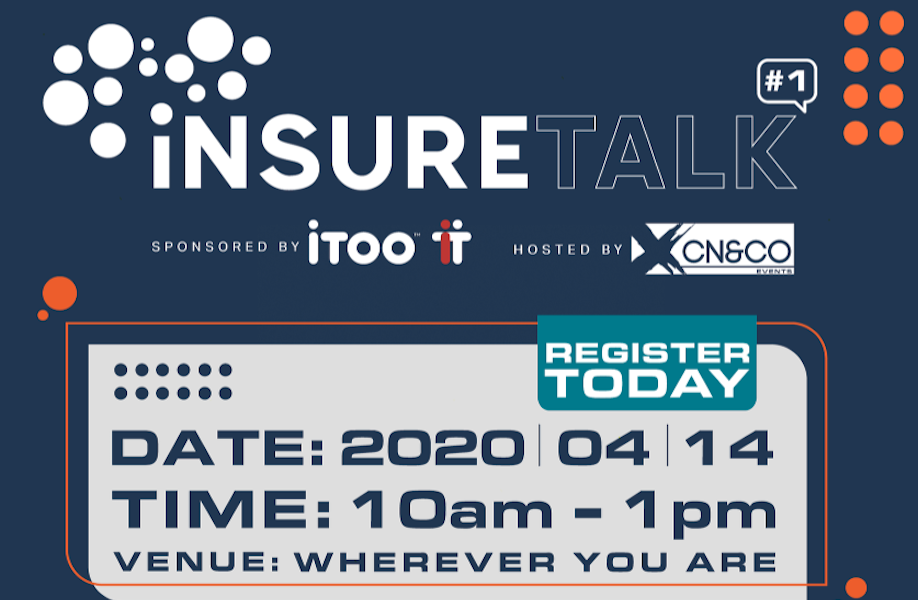
Insurance industry set to come together online for InsureTalk ‘mini-conference’
CN&CO Events presents InsureTalk1, the first in a series of online insurance “mini-conferences”

Week #48: Insurance news wrap-up
At CN&CO we love to be informed about the insurance industry – with so much happening it can b

Week #8: Insurance news wrap-up
At CN&CO we love to be informed about the insurance industry – with so much happening it can b